Morocco is a fossil lover’s paradise, and among its most iconic and scientifically significant treasures are trilobites—extinct marine arthropods that roamed prehistoric oceans over 500 million years ago. These extraordinary fossils are more than just remnants of the past; they are windows into the early evolution of life on Earth.
Why Morocco?
Morocco is one of the world’s richest sources of trilobite fossils, particularly in the Anti-Atlas Mountains near towns like Alnif, Rissani, and Zagora. These regions were once submerged under an ancient ocean, known as the Gondwanan Sea, which preserved an incredible diversity of marine life in the sedimentary rock layers.
What makes Moroccan trilobites so special is their exceptional preservation quality, diversity of species, and accessibility—making them prized by collectors, museums, and paleontologists across the globe.
What Are Trilobites?
Trilobites were hard-shelled marine animals that lived during the Paleozoic Era. They had segmented bodies, complex eyes, and a three-lobed structure (hence the name tri-lob-ite). They thrived for over 270 million years before going extinct around 250 million years ago during the Permian mass extinction.
In Morocco, you can find:
- Phacops species with large, detailed eyes
- Paralejurus with smooth, rounded shells
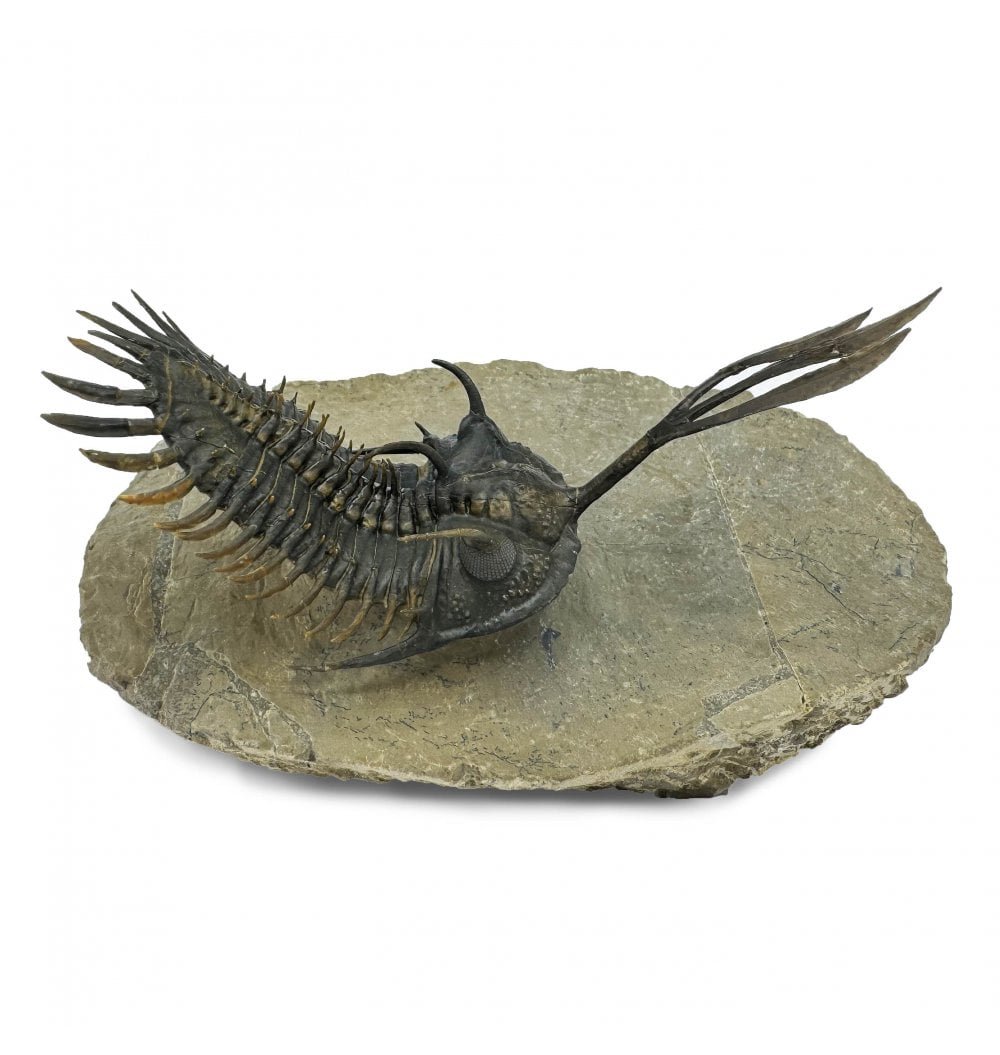
- Dicranurus with dramatic spines and ornamentation
- Crotalocephalina with beautifully curved segments
Some Moroccan trilobites are so well-preserved that their exoskeleton details, eye structures, and even molting behavior can be studied in high resolution.
From Desert Rock to Museum Piece
In the fossil beds of the Anti-Atlas, local diggers extract trilobites with extreme care. The preparation process is highly skilled and involves fine tools, air abrasives, and sometimes weeks of meticulous work to reveal the intricate details without damaging the fossil.
Moroccan fossil preparators are among the best in the world, and many of the museum-quality trilobites you see worldwide come from the hands of these artisans.
Fossil Tourism and Ethical Collecting
Today, Morocco is not only a source of high-quality trilobites but also a destination for fossil tourism. Guided geological tours let visitors:
- Visit active fossil sites
- Meet local diggers and preparators
- Learn how fossils are found, extracted, and prepared
- Collect legally allowed specimens to take home
At Morocco GeoDiscovery, we promote ethical and educational fossil tourism—respecting both the scientific value of fossils and the livelihoods of local communities.
Trilobites: More Than Just Fossils
Trilobites tell the story of early complex life and evolutionary innovation. Their eyes, for example, were some of the first in the animal kingdom to develop lenses made of calcite—an incredible feat of natural engineering. By studying trilobites, scientists can trace the development of biodiversity and extinction patterns across Earth’s deep history.
Buying Moroccan Trilobites
Trilobites are also available for purchase from reputable Moroccan fossil shops, often set in limestone matrix or polished for display. If you’re buying, make sure to:
- Choose fossils with clear provenance
- Buy from trusted sources or on-site workshops
- Support ethical fossil preparation practices
Final Thoughts
The trilobites of Morocco are more than just ancient animals—they are ambassadors of prehistory, beautifully preserved in stone and brought to life by the hands of skilled Moroccan fossil hunters. Whether you’re a collector, student, or curious traveler, standing in the desert where these creatures once lived is an unforgettable experience.